
Marina Berkman
“Meeting my fellow Russian-speaking immigrants was a culture shock comparable to meeting Americans.”
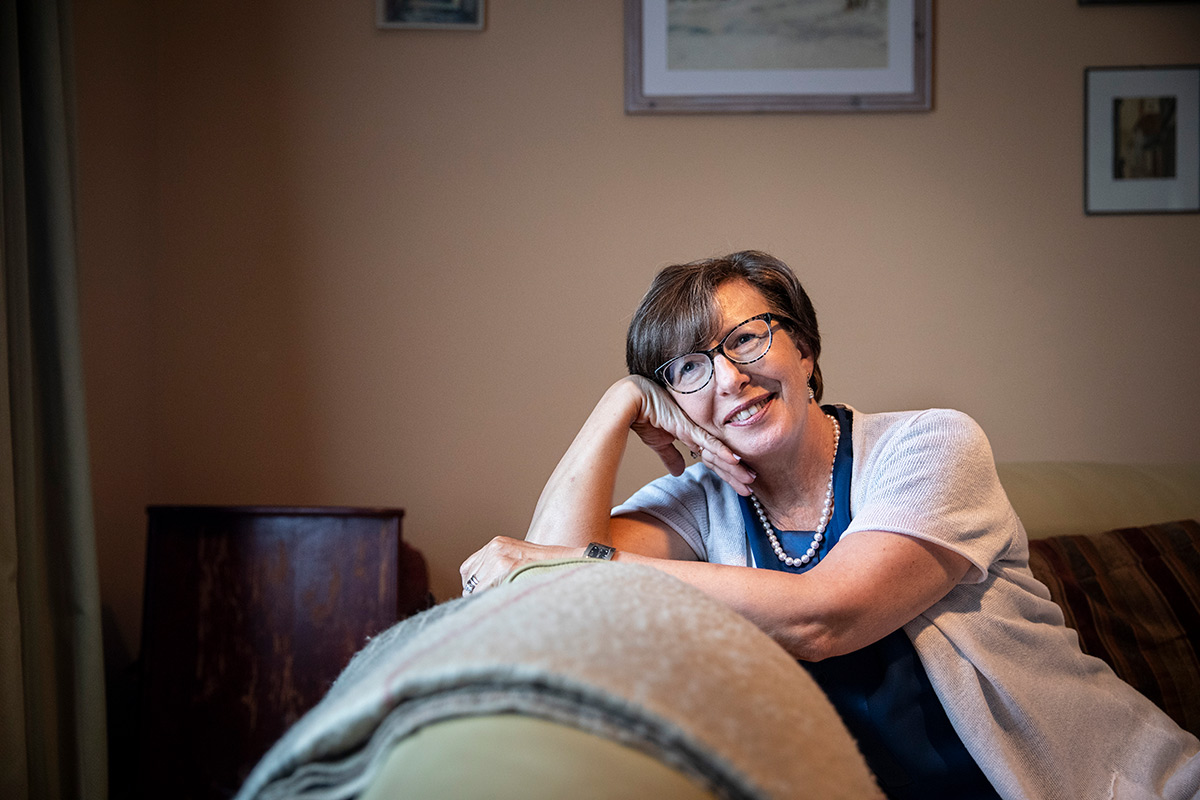
My family had planned to immigrate to Israel from Tallinn, Estonia after my husband finished his time as a visiting scientist in Stockholm, Sweden. During that time, he was invited to give a paper in Los Angeles at a conference, and his relatives in West Hollywood suggested that my eight-year-old daughter and I join him, inviting us to stay with them.
The day after my family left for our first United States visit in January 1991, Soviet tanks appeared on the streets of Tallinn to prevent Estonia from becoming independent. Then, while we were visiting in West Hollywood, the 1991 Gulf War broke out and we realized we would not be able to immigrate to Israel after all. It was a scary time for us, and we applied for political asylum in the United States. That is how we found ourselves as residents of West Hollywood.
Moving to the suburb-like new City of West Hollywood after living all my life in an old European city with fifteenth- and sixteenth-century buildings was a new concept to me. I was very determined to learn about the American value system and the American way of life—everything. Meeting my fellow West Hollywood Russian-speaking immigrants was a culture shock comparable to meeting Americans. When I started making connections with them, I was so surprised by their diversity, because in Tallinn, the Russian-speaking Jewish community was pretty homogeneous. In West Hollywood, the only thing that people from Moscow, Saint Petersburg, Uzbekistan, Kazakhstan, Ukraine, and Georgia had in common was that they spoke Russian and that they were from the former Soviet Union—and most of them were Jewish.
My husband and I got our work permits after applying for political asylum. He got a job at UCLA, but my degree in psychology wasn’t recognized here. I was determined to start my career all over. I volunteered at Temple Beth El on Fountain and Crescent Heights [in West Hollywood] to counsel Russian-speaking immigrants and went back to school at Cal State Northridge to get an American master’s degree. When a job opened up for a Russian speaker at the city-funded Jewish Family Services’ Senior Center in Plummer Park, I was hired for the position. Having a Russian speaker at the center made all the difference to the immigrants who needed help filling out applications for food stamps or SSI [Supplemental Security Income], and any other English-language paperwork. Everything was on paper at that time! Back then, the younger Russian-speakers who needed help were referred to the Russian Community Center, but when it closed down, we started to provide services for anyone between eighteen to fifty-five years old who was disabled and lived in West Hollywood.
Through my work with the West Hollywood Russian-speaking community, I came to understand the psychological and historical perspective of why they acted the way they did. Their behavior was acquired back in the former Soviet Union as a survival skill but was considered out of place here. It was hard for those who survived World War Two to undo the harm done to them by the Nazis and later by the Soviet government’s power. But once they understood the realities of their new life in America and obtained help at the West Hollywood Senior Center, they adjusted better. Over time, I was considered an expert on the psychocultural characteristics of Soviet Jewish immigrants, and I got invited by different organizations to give lectures.
One of the lessons I learned in West Hollywood was that the gay community and the Jewish Russian-speaking community both had the experience of being in the closet where they came from, and then coming out when they moved to West Hollywood. In West Hollywood, there was no shameful feeling about being Jewish, just like there was nothing wrong with you if you were gay. I really learned about the City’s LGBT community through personal connections. I would go to the City’s Gay Pride Parade and Halloween celebration. When I went to the first Gay Pride Parade, I was observing with an open mind. I was happy to see people so free and so happy in their expression of who they were. I was always curious and asked people how they came to that point in their lives. It was amazing to me that here, people could openly talk about sexuality and their sexual orientation.
It was the same for the Jews from the former Soviet Union. In West Hollywood, they could say out loud they were Jewish. I saw that interacting with these different communities in West Hollywood was a way for everyone to understand each other better, and I wanted to bring the LGBT and Russian-speaking communities together. When I served on the City’s Russian Advisory Board, I envisioned having a group of people from the LGBT community and from the Russian-speaking community meet on a regular basis to share their stories. At some point, after I left the board, that happened.
I also helped other segments of the West Hollywood community understand the Russian-speaking immigrants better. When I became part of the Eastside Working Group, the group of residents, City staff, and businesspeople created to identify the needs on the eastside of town, I gave a PowerPoint presentation explaining what life was really like for residents who came from the former Soviet Union. The group was so thankful because they didn’t know about the trauma those immigrants had faced, or why they were so loud in public and skeptical of government. After the presentation, the group had more compassion and tolerance for the behavior of the immigrants. I remember one of the group members became tearful from seeing the presentation.
Having the different task forces, boards, and commissions made West Hollywood unique. It gave the residents an opportunity to share their ideas and energy. Now, residents are very used to having a voice in City matters. It doesn't always bring positive outcomes, but mostly it does. I don't know if there are other cities that have as many advisory boards as West Hollywood does.
In 2005, I became the director of the center, which was now called West Hollywood Comprehensive Service Center, a program of Jewish Family Service. The relationship between JFS and the City has been very trusting and very collaborative. I was able to create new programs when we learned more about community needs—and I could do very innovative work. One program I helped to create was “Connect.” It's a volunteer-based program matching volunteers with homebound seniors who live alone and have difficulty navigating the stairs—and in West Hollywood, there are so many apartment buildings that are two-story with no elevator. The volunteers meet with the older adults and take them shopping and run other errands, and help them navigate the stairs. I know that nothing like that exists in the City of Los Angeles.
One other program I was very proud to create dealt with hoarders. The goal was to help them so we could stop evictions, which prevented more homelessness, and to prevent fires, which could spread to other apartments and houses. I learned about hoarding by reading books and attending conferences after I joined a Hoarding Task Force created by the City of West Hollywood. I needed to understand the problem better to be able to train and supervise a mental health social worker position added by the City to our JFS team to work with hoarders in the community.
Hoarding is a mental health problem and requires a trained professional to assist those affected by it. Our program became known to the City of Santa Monica and their staff asked me to share how to start that kind of program. Eventually, I was doing presentations together with the mental health social worker at some local and national conferences for the American Society on Aging on our work with hoarders. My active role to better the lives of West Hollywood community members was recognized in 2006 when I got the Women in Leadership award from the City’s Women’s Advisory Board.
I always told my team at Jewish Family Service that basically, we were changing the life of the West Hollywood community one person at a time because the community was the sum of its members. Over the years, the kind of people coming to the center changed. We have less Russian speakers and more English speakers coming, especially HIV-positive seniors from the more affluent westside of town. When they thought they had one or two years to live, they spent all their savings, so now, as older adults, they find themselves in a tough situation and need our help.
The City has gotten more modern since I first arrived here. The physical appearance has improved—it’s less like a village. That brought younger people into the City. I know there are some people with pretty loud voices in the City who don't like the fact that it's gotten less like “a village,” but I love it. I love walking along Santa Monica Boulevard, especially Boystown. It's interesting. It’s alive. If you go to Beverly Hills in the evening, it's dead, but West Hollywood is different. Even my younger daughter, who was born here and is straight, loves going to gay clubs in West Hollywood. Those clubs are so welcoming, and it doesn't matter if someone is gay or straight. Maybe I'm delusional, but I think that people in West Hollywood are more agreeable and tolerant than elsewhere. That has been my experience.
Living and working in the City, I’ve gotten to know so many people. When I go to a store or City Hall, people say hello to me, and they know my face. When I go to a City park, there are people I share history with. I think the foundation of Cityhood was that the City would care for every group in the community, for everyone to feel at home. That is what I appreciate most about the City.
I retired in 2025 from the West Hollywood Comprehensive Service Center. It was the only [paying] job I had in America. I did move away from West Hollywood years ago to be closer to the ocean, but when you live, work, or play in West Hollywood, you are always part of the West Hollywood community.

